Illustrated
Crack Repair
Environmental
Protection for Your Building
Home Maintenance Checklist
5 Biggest Restoration Mistakes
The Importance of Climate Control to Protect Your Building
Climate control is an important consideration for historic building
maintenance. We are all familiar with the large temperature swings experienced
in the Northeast climate, and buildings experience temperatures ranging
from -30° below freezing to 100° in the sun just like we do!
Just as we desire cooling relief and the warmth of the furnace for our
quality of life- buildings need these things just as much to preserve
their quality. Significant fluctuations in building temperature directly
(and possibly negatively) impact the longevity of your preservation
efforts. As you consider your building maintenance plan, and before
you invest in a preservation effort, consider the importance of climate
control.
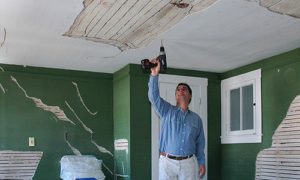
Large swings in temperature cause all surfaces to expand and contract
accordingly. These changes in surface tensions cause considerable stress
on all building materials, as well as the contents of the building.
The unfortunate result of these changing surface tensions is eventual
failure of plaster, paint, glue and nails. As the many surfaces move,
interior paint begins to crack and alligator, plaster cracks and releases
from its lath or base surface, nails bend or break, and glue cracks,
flakes and withers away. In addition to the building itself, large temperature
changes threaten the preservation of manuscripts and documents, furniture
and fixtures, antiques, and other important building contents.
If you use the building during the colder months at all, it is more
cost effective to maintain a minimum temperature and bring the building
up to comfortable temperature than to attempt to bring the building
from 10° to 68° on any regular basis.
It is our recommendation that the building heat be maintained throughout
the colder months at 50°-55° Fahrenheit which is considered
'Museum Temperature', the minimum temperature preferred by museum curators,
art historians and historic preservation professionals. This is a solid
first-step toward protecting your important historic building and its
contents.
Return to the top.
5 Biggest Restoration Mistakes
1. Skipping the
necessary research and investigation to determine the building's history,
what the period details were, where materials can be found, what modern
methods are available, and what preservation experts can advise and
assist.
2. Failing to develop
a Preservation Plan including the project timeline and priorities, budget,
and maintenance schedule.
3. Investing in
improving cosmetic details before restoring the structural integrity
of the building.
4. Performing projects
in a sequence that undermines previous work ~ finishing floors before
the walls are repaired, restoring plaster before foundation repairs
are completed.
5. Short-term "cures"
that lead to more serious problems in the future (using inferior quality
products, performing cosmetic cover-ups, etc.).
Return
to the top.