Repairs to Plaster Cracks
Cures for Calcimine Ceilings

Hanging by a Hair — Techniques for Reattaching Plaster Ceilings

Tips for Selecting a Specialty Contractor


Repairing Plaster Cracks

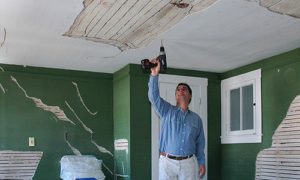
It is very rare to see older plaster without any cracks, and there are those of us that find cracks part of plaster's aesthetic character and charm - love plaster, love cracks. Cracking, however, can also be serious and lead to further plaster damage if not taken care of. Cracks occur for a variety of reasons, many of which are simply the natural reactions of plaster compounds and building materials. Climate and temperature changes, building settling and moving over time, weight loads, chimney movement and environmental stresses (heavy traffic, nearby trains, construction blasting) all contribute to plaster cracking. Cracking is further exacerbated by any structural disturbances or repairs to a building (foundation work, sill repair), leaving a building unheated during the winter, deteriorating framing and timber (rotting sills, weak floors and joists, insufficient framing), or water leaks. Some or any of these conditions are usually present in older homes and buildings. Click here for more information.

Return to the top.


Cures for Calcimine Ceilings

If patches of peeling paint on a ceiling or flakes of paint chips littering the room is a familiar site in your old house, your ceiling likely has a past that includes calcimine paint.

Being essentially chalk, the water-based mixture of calcimine paint contained minimal binders and glues for adhesion. Herein lies the problem for those of us dealing with peeling paint now, because this lack of active binder chemicals discourages modern paints from adhering. Over time, any paint coatings over a calcimine base will fail, chipping and peeling away modern paint coverings have nothing to "stick" to. Click for more information.

Return to the top.


Hanging by a Hair — Techniques for Reattaching Plaster Ceilings
Most of us with an older home have experienced sagging and cracking plaster in our ceilings. While ceilings are affected by all the normal wear and tear that goes on within our houses - structural shifting, leaks and temperature shifts, traffic and vibrations - they have the addition stress of being at the mercy of gravity! Because ceiling surfaces tend to be some of the largest, unsupported surfaces in the house, older plaster systems applied over wooden lath have a limited life span before they begin to break and pull away. The good new is, they can be repaired and saved from further damage.

We have successfully reattached many old ceilings using a reattachment process which involves injecting glue to create a new bond between the plaster and lath where the keys have been damaged and broken away over time. This technique uses modern adhesive materials that are easy to handle and cause minimal damage to savable plaster, and will restore the old plaster's integrity for many more years. Click for more information.

Return to the top.


Tips for Selecting a Specialty Contractor

We believe restoration is an art, and those of us working in the restoration trades have spent years developing special techniques and expertise to handle a restoration project with the sensitivity necessary to maintain historic integrity. Click for full article.

Return to the top.

©Copyright 2007 Peter Lord Plaster & Paint, Inc. • 24 Moody Road, Limington, Maine 04049 (207) 793-2957